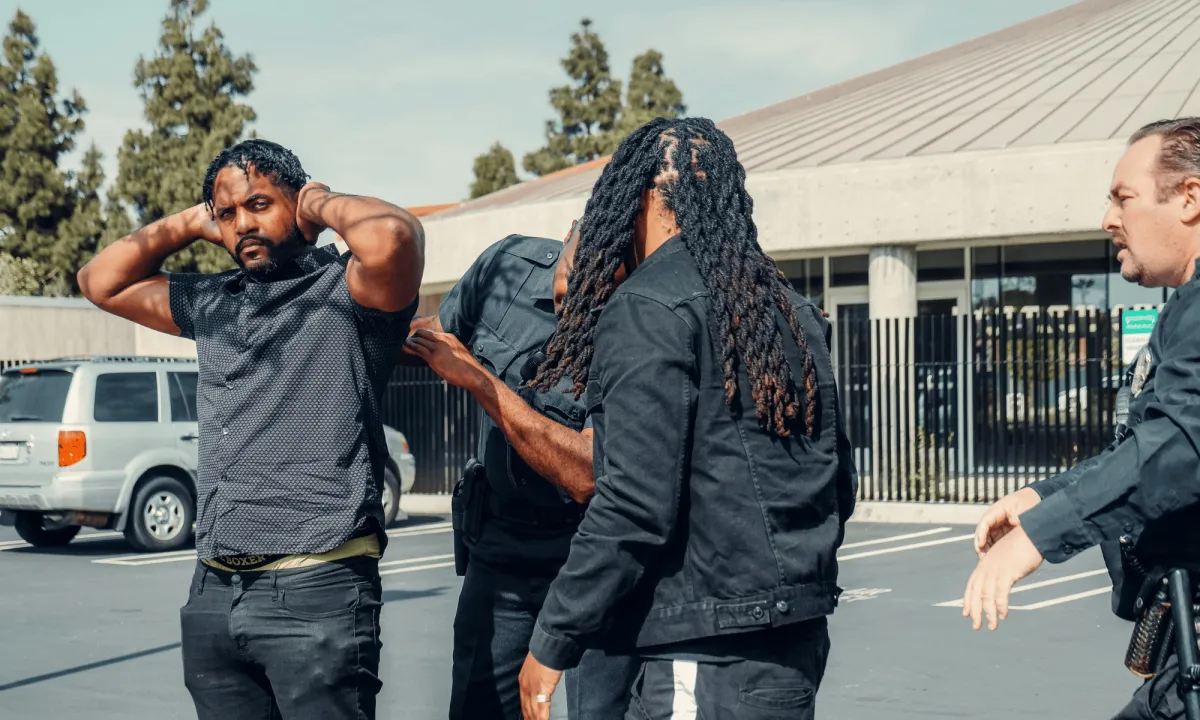
Was the Traffic Stop Legal: Unlawful Stops and Texas DWI Cases
In a DWI case, most people focus on the breath test, the blood test, or the field sobriety tests. Those things matter, but the traffic stop is the first domino. If the stop was not legal, or if the stop was extended beyond what the law allows, the rest of the case can change quickly.
My name is Paul Key. I defend DWI cases in McKinney and across Collin County and Dallas County. When I evaluate a DWI arrest, one of the first questions I ask is simple: was the stop lawful from the beginning, and did it stay lawful as it unfolded.
Why stop legality matters so much
A traffic stop is a seizure under the Fourth Amendment. Once an officer stops you, the officer starts collecting evidence: observations, statements, field tests, and sometimes chemical tests. If the stop or detention violated constitutional standards, the defense may be able to challenge evidence gathered as a result. That is why the timeline and justification for every step matters.
The basic legal standards in plain English
Reasonable suspicion
An officer needs reasonable suspicion to detain someone for investigation. In Texas, the Court of Criminal Appeals has emphasized that reasonable suspicion is based on the totality of the circumstances and asks whether there was an objectively justifiable basis for the detention.
Probable cause for a traffic violation
If an officer has an objectively valid reason to believe a traffic violation occurred, the stop is generally lawful even if the officer also had other investigative motives.
That reality surprises people. Many DWI stops start with something minor: a lane allegation, equipment issue, wide turn, or speed. The defense work is not about what the officer says they suspected. It is about what the officer could lawfully justify and what the evidence supports.
Reasonable mistakes of law
Sometimes a stop is based on an officer’s misunderstanding of a traffic rule. The Supreme Court has held that an objectively reasonable mistake of law can still support reasonable suspicion for a stop.
That does not mean every mistake is “reasonable.” It means the defense needs to analyze what rule the officer relied on and whether that reliance holds up.
Common stop issues that show up in DWI cases
Vague driving allegations with weak support
Police reports often use general language like “weaving,” “failed to maintain lane,” or “erratic driving.” Video frequently tells a more precise story. In some cases, the stop justification falls apart when you compare the report to dash cam footage.
Texas courts do suppress evidence when the stop lacks a reasonable basis. A useful example is State v. Cortez, where the Texas Court of Criminal Appeals agreed the trooper did not have a reasonable basis to stop the vehicle.
Stops based on assumptions instead of articulable facts
Reasonable suspicion requires specific, articulable facts and rational inferences from those facts. When the officer’s basis is speculative, the stop can become a suppression issue. Texas case law on reasonable suspicion repeatedly reinforces that the standard is objective and fact-driven.
When a legal stop becomes an illegal detention
Even if the initial stop was lawful, the stop can become unlawful if the officer extends it beyond what is reasonably necessary to complete the purpose of the stop, unless there is independent reasonable suspicion to justify the added time.
The Supreme Court’s Rodriguez decision is the key case on this point. The Court held that a stop becomes unlawful if it is prolonged beyond the time reasonably required to complete the mission of the stop, absent independent reasonable suspicion.
Texas courts analyze detention duration and purpose as well. In Kothe v. State, the Texas Court of Criminal Appeals emphasized that a detention must be reasonable in scope and duration, and that evidence can be tainted by an unlawful prolonged detention.
What does “extension” look like in a DWI context?
The traffic ticket or warning is effectively complete, but the officer keeps you there to build a new investigation
The officer delays the stop without a clear reason while waiting for something unrelated
The officer turns a traffic stop into a fishing expedition that adds time without legal justification
The key is the stop’s timeline. Seconds and minutes matter.
What I review to determine whether the stop was legal
Stop legality is not something you guess at. It is something you test against evidence.
In a DWI case, I typically want to see:
Dash cam video from first observation through arrest
Body camera video, especially during questioning and field tests
Dispatch logs and timestamps
The officer’s written narrative and any supplemental reports
The exact alleged traffic violation and the applicable traffic rule
This is why early representation matters. Video can be overwritten, and requests need to go out quickly.
How an unlawful stop can affect the outcome
If a court finds the stop was unlawful, or that the detention was unlawfully extended, the defense can seek suppression of evidence obtained as a result. Practically, that can mean the State loses some or all of the evidence it relies on to prove intoxication.
In many DWI cases, the State’s proof depends on the officer’s observations and the steps taken after the stop. If those steps are tied to a constitutional violation, the case posture changes.
A quick note about what the State must prove in Texas DWI cases
Texas defines “intoxicated” as either not having the normal use of mental or physical faculties due to alcohol, drugs, or other substances, or having an alcohol concentration of 0.08 or more.
That definition is broad, which is why stop legality matters so much. If the stop and detention are not lawful, the State may not be able to use key evidence to meet that definition.
What you should do if you were arrested for DWI
Do not try to explain the stop to anyone but your lawyer.
Write down what you remember about the timeline: where you were, when the lights came on, what the officer said the reason for the stop was, and how long you were on the roadside.
Identify whether passengers were present and what they observed.
Act quickly. Video evidence is often time-sensitive.
Talk with a McKinney DWI defense attorney
A DWI case is not only about tests. It is also about the legality of the stop, the legality of the detention, and whether the evidence was gathered in a way the Constitution allows.
If you were arrested for DWI in McKinney, Collin County, or Dallas County, and you want a lawyer who will evaluate the stop and build a defense based on evidence, call me. I will speak with you in confidence about your case and explain what it would cost for me to defend you.
Citations
https://law.justia.com/cases/texas/court-of-criminal-appeals/2011/20534.html
https://law.justia.com/cases/texas/court-of-criminal-appeals/2018/pd-0228-17-1.html
https://law.justia.com/cases/texas/court-of-criminal-appeals/2011/20533.html
https://caselaw.findlaw.com/court/tx-court-of-criminal-appeals/1092832.html
