Field Sobriety Test Errors in Texas DWI Cases
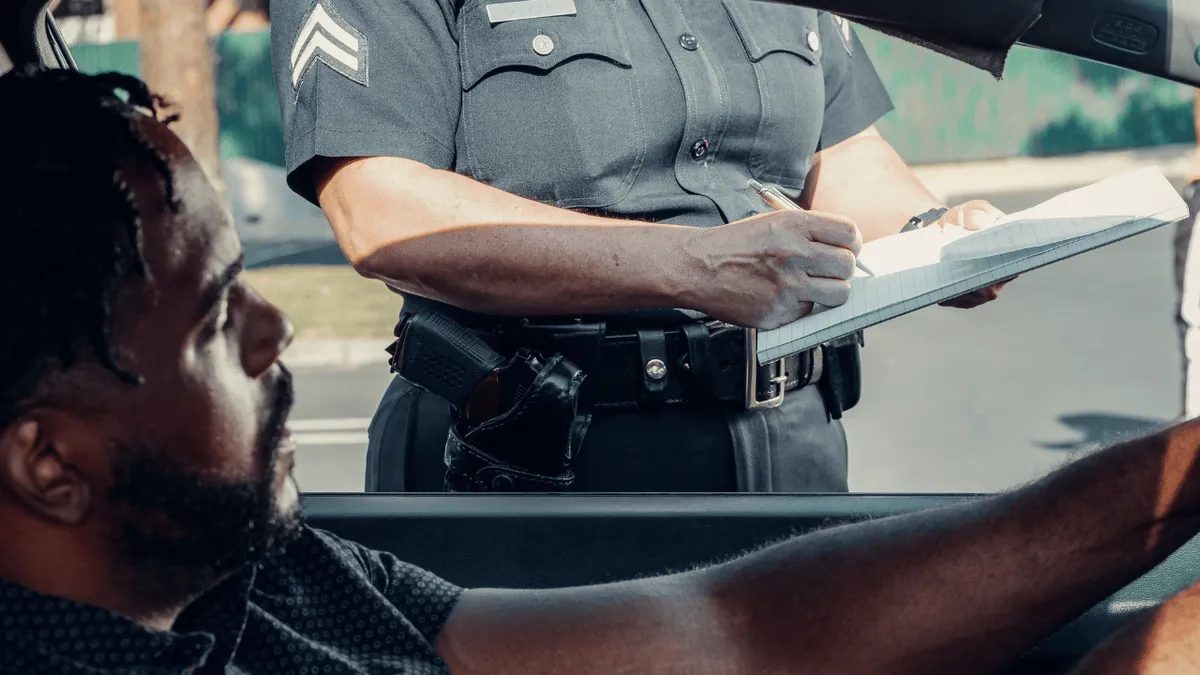
Suppose you are driving home late at night and a police officer pulls you over. After speaking with you for a few minutes, the officer asks you to step out of the vehicle and perform field sobriety tests.
During the Walk-and-Turn test, the officer gives you a long series of verbal instructions. You are told where to stand, how to position your feet, how many steps to take, how to touch heel-to-toe, how to turn, and how to walk back. Only after delivering those instructions does the officer demonstrate part of the test.
You start before the officer tells you to begin. Later, you leave a small space between your heel and toe during one of the steps.
The police report identifies those mistakes as clues of intoxication.
At first glance, that sounds damaging. But when I review a case like this, I want to know more than how many mistakes the officer wrote down. I want to know whether the officer administered the test correctly and whether a sober person receiving the same instructions could reasonably have made the same mistakes.
That can significantly change how I evaluate the evidence.
A Hypothetical Texas DWI Investigation
Consider the hypothetical driver in more detail.
The driver is stopped for a traffic violation. The officer does not report an accident or extremely dangerous driving. During the initial conversation, the driver answers questions appropriately and produces a driver's license and insurance information without significant difficulty.
The officer suspects alcohol consumption and begins a DWI investigation.
On the Walk-and-Turn test, the driver starts early and misses heel-to-toe once. The officer later lists those observations in the report as evidence supporting the conclusion that the driver was intoxicated.
If I only read the report, those facts may appear straightforward.
But I do not evaluate field sobriety testing solely from a police report. I want to watch the video.
What Does the Body Camera Show?
The body camera allows me to examine something the written report cannot fully capture: exactly how the officer administered the test.
I want to hear every instruction.
I want to see every demonstration.
I want to know whether the officer followed the standardized procedures the officer was trained to use.
The National Highway Traffic Safety Administration developed standardized procedures for administering field sobriety tests. The reliability associated with those tests depends in part on standardized administration and interpretation.
That distinction matters.
If an officer identifies a driver's performance as evidence of intoxication, the defense should be able to examine whether the officer followed the procedures that are supposed to make that performance meaningful.
Starting Too Early Does Not Tell Me Everything
Starting the Walk-and-Turn test before being told to begin can be treated as a clue during the testing process.
But I want to know what happened before the driver started.
The instructions for this test are important because the driver is expected to maintain a particular position while listening to the officer and waiting to begin. Proper administration is intended to make clear that the person should remain in that position until instructed to start.
Now return to our hypothetical.
Suppose the officer tells the driver not to start yet, but only does so briefly. The officer then continues talking through numerous additional instructions. At some point, the driver hears what sounds like the next instruction and begins walking.
Does that prove the driver was intoxicated?
Not necessarily.
The question becomes whether the driver failed despite receiving standardized instructions or whether the officer's own administration contributed to the mistake.
That is a much different way of looking at the same evidence.
Instructions and Demonstrations Matter
Another problem I look for is the way the officer explains and demonstrates the exercise.
Think about trying to teach someone an unfamiliar physical task. It is much easier to understand when the person teaching it explains each step while demonstrating what to do.
Now imagine receiving numerous verbal instructions first and watching a demonstration afterward.
You have to remember the earlier instructions, connect them to the later demonstration, and then perform the task correctly while standing on the side of a road knowing that you may be arrested.
That is why the sequence and manner of the officer's instructions matter.
In our hypothetical case, suppose the video shows the officer rapidly giving the driver nearly all of the Walk-and-Turn instructions before demonstrating the test. The driver then makes a relatively minor mistake.
I would compare what occurred on the video with the officer's standardized field sobriety testing training.
If the officer did not follow the standardized procedure, that becomes part of my evaluation of how much weight the driver's mistake deserves.
The Officer's Own Training Can Become Important Evidence
One of the most useful ways to evaluate field sobriety test errors in Texas is to compare what the officer actually did with what the officer was trained to do.
The officer may testify that starting too early or failing to touch heel-to-toe indicates impairment. But that raises another question: What procedures was the officer trained to follow before interpreting those actions?
Standardized testing works by standardizing the test.
If the government relies on studies concerning the effectiveness of a particular testing protocol, I want to know whether that protocol was actually used in my client's case.
The State should not receive the benefit of standardized testing while ignoring meaningful deviations from the standards used to administer it.
What About the Stress of a DWI Investigation?
There is another issue that should not be ignored.
A roadside DWI investigation is stressful.
A driver may be standing near traffic at night with emergency lights flashing behind them. A police officer is evaluating everything the driver says and does. The driver may already suspect that an arrest is possible.
That is not the same environment as casually performing a physical exercise without consequences.
Stress does not automatically explain poor performance, and nervousness does not prove sobriety. But when I evaluate a driver's mistakes, I consider whether those mistakes could reasonably have resulted from confusion, nervousness, the testing environment, or improper instructions rather than intoxication.
The more normal the driver otherwise appears on video, the more important those alternative explanations may become.
Suppose the Driver Looks Sober on Video
Now add another fact to our hypothetical.
The driver speaks clearly throughout the encounter. There is no obvious stumbling when getting out of the vehicle. The driver understands the officer's questions and responds appropriately. The driver's movements generally appear coordinated.
The State nevertheless points to the early start and one heel-to-toe mistake as evidence of intoxication.
That is a case where the administration of the Walk-and-Turn test may become particularly important.
A jury does not have to rely exclusively on the officer's characterization of what happened. If video exists, jurors may be able to see the driver's behavior and the officer's instructions themselves.
The defense can then ask whether the alleged clues really demonstrate intoxication or whether they have another reasonable explanation.
An Improper Test Does Not Automatically Win the Case
There is an important limitation to this argument.
Suppose we change the hypothetical. The officer makes the same instructional mistakes, but the video also shows the driver stumbling repeatedly, struggling to understand simple questions, losing balance throughout the investigation, and displaying other significant signs of impairment.
In that situation, criticizing the Walk-and-Turn instructions may not change the overall strength of the case.
That is why I do not build a DWI defense by finding one technical mistake and declaring the case won.
Everything has to be evaluated together.
The field sobriety tests are one part of the evidence. The driver's appearance, speech, coordination, driving behavior, chemical test results, body camera footage, dash camera footage, and officer's observations may all matter.
The real question is whether the State can prove intoxication beyond a reasonable doubt when all of that evidence is considered.
How I Evaluate Field Sobriety Test Errors in a Texas DWI Case
When I review field sobriety testing, I am not simply counting mistakes made by the driver.
I am evaluating the officer, too.
Did the officer give the proper instructions? Did the officer demonstrate the test correctly? Did the officer follow the standardized sequence? Does the body camera support what the officer later wrote in the report? And does the driver's overall appearance support the conclusion that those alleged clues resulted from intoxication?
Those questions can expose a significant weakness in a DWI investigation.
They can also confirm that the State has stronger evidence than the client initially believed.
Either result is useful because my job is to determine what the evidence actually shows before recommending whether we should negotiate, file appropriate challenges, or prepare to take the case to trial.
Talk With a McKinney DWI Defense Attorney
If you were arrested for DWI after performing field sobriety tests, the number of alleged clues listed in the police report does not tell the entire story.
The video needs to be reviewed. The officer's instructions need to be examined. The testing procedures should be compared with the officer's training. Most importantly, the field sobriety tests need to be considered alongside the rest of the evidence.
If you are facing a DWI charge in McKinney, Collin County, or the surrounding area, I can review the police report, video, chemical testing, and field sobriety test administration to determine what the evidence actually shows.
Contact my office to schedule a confidential consultation.
Citations
https://www.nhtsa.gov/risky-driving/drunk-driving
https://statutes.capitol.texas.gov/Docs/PE/htm/PE.49.htm
Featured image by Kindel Media
