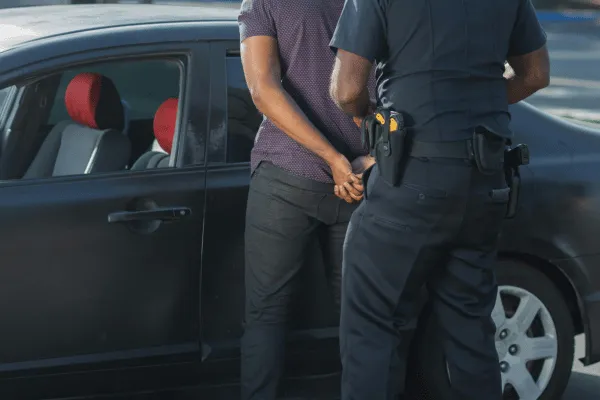
Can Police Search My Car Without a Warrant in Texas?
Can Police Search My Car Without a Warrant in Texas?
Many DWI and drug cases in McKinney and across Collin County begin with a traffic stop. What happens next often determines whether the case is strong, weak, or legally flawed.
One of the most important questions is this: can police search your car without a warrant?
The short answer is yes—sometimes. But only under specific legal rules. If those rules are violated, the evidence gathered during the search may be challenged in court.
The Basic Rule: The Fourth Amendment
A traffic stop is considered a seizure under the Fourth Amendment to the United States Constitution. Once you are stopped, the officer’s actions must comply with constitutional standards.
If a search violates the Fourth Amendment, the defense can ask the court to suppress the evidence. Suppression can significantly change the posture of a DWI or drug case.
The “Automobile Exception”
Under both federal and Texas law, police do not always need a warrant to search a vehicle.
If an officer has probable cause to believe a vehicle contains evidence of a crime, the officer may search the vehicle without first obtaining a warrant. This is commonly referred to as the “automobile exception.”
Probable cause requires specific, articulable facts—not speculation or a general hunch.
For example, officers often claim:
Odor of marijuana or alcohol
Visible contraband
Admissions by the driver
Evidence in plain view
The question in court is not what the officer suspected. The question is whether the facts legally supported probable cause.
Consent Searches: What Counts as Consent?
Another common basis for a vehicle search is consent.
If you give voluntary consent, an officer may search your vehicle without a warrant. However, several issues often arise:
Was the consent actually voluntary?
Was it given after pressure or prolonged detention?
Did the officer exceed the scope of consent?
Was consent withdrawn?
Consent must be voluntary under the totality of the circumstances. If it was coerced or obtained after an unlawful extension of the stop, the search may be challenged.
Video evidence often becomes critical in these situations.
When a Legal Stop Becomes an Illegal Detention
Even if the initial traffic stop was lawful, it can become unlawful if it is prolonged beyond what is reasonably necessary to complete its purpose.
The United States Supreme Court addressed this issue in Rodriguez v. United States, holding that a stop becomes unlawful if it is extended without independent reasonable suspicion.
In practical terms, that means:
Once the traffic mission is complete, the officer cannot continue detaining you to investigate unrelated suspicions without legal justification.
Delays intended to “fish” for additional evidence can create suppression issues.
Timeline matters. Minutes matter.
Search Incident to Arrest
In certain circumstances, police may search a vehicle after making an arrest. However, this authority is limited.
The scope of a search incident to arrest depends on whether the arrestee is unsecured and within reaching distance of the vehicle or whether it is reasonable to believe evidence relevant to the arrest offense may be found inside.
This is not an unlimited right to search.
How an Unlawful Search Affects Your Case
If a court determines that a search violated constitutional standards, the defense can file a motion to suppress.
If suppression is granted, the State may lose:
Alleged drugs
Containers
Test results
Statements tied to the search
Other derivative evidence
In many cases, suppression can substantially weaken or eliminate the prosecution’s evidence.
This is why early review of video, dispatch logs, and timelines is important. Evidence preservation is time-sensitive.
Drug Possession and “Proximity” Issues
In drug cases, the State must prove more than presence near contraband. Texas law requires proof of possession, which involves care, custody, control, or management.
If drugs are found in a shared vehicle, the State must connect them to a specific person through independent evidence. Mere proximity is not automatically possession.
Search legality and possession proof are often intertwined.
What You Should Do After a Vehicle Search
If your vehicle was searched in McKinney, Collin County, or Dallas County:
Do not discuss the case publicly.
Do not assume the search was automatically lawful.
Write down what you remember about the timeline.
Preserve any paperwork given to you.
Contact a defense attorney early so video evidence can be requested.
A search that appears routine may have legal defects when examined carefully.
Talk With a McKinney Criminal Defense Attorney
Vehicle searches are one of the most litigated areas of criminal defense. The legality of the stop, the duration of the detention, the basis for probable cause, and the validity of consent all matter.
If you are facing DWI or drug charges in McKinney, Collin County, or Dallas County, and your vehicle was searched, your defense should begin with a careful review of constitutional issues.
An arrest does not determine the outcome. Evidence and procedure do.
Call for a confidential consultation to evaluate your case.
Legal Citations
U.S. Const. amend. IV (Fourth Amendment)
Rodriguez v. United States, 575 U.S. 348 (2015)
Texas Penal Code § 49.04 (Driving While Intoxicated)
Texas Health & Safety Code § 481.115 (Possession of Controlled Substance)
Photo by Kindel Media
