
Se Habla Español
Blog
Legal insights, defense strategies, and practical guidance for individuals facing criminal charges in Texas.
Our blog breaks down Texas criminal law in clear terms — so you understand your rights, your options, and what to expect at every stage of the justice process.
When DWI Testimony Conflicts With Video
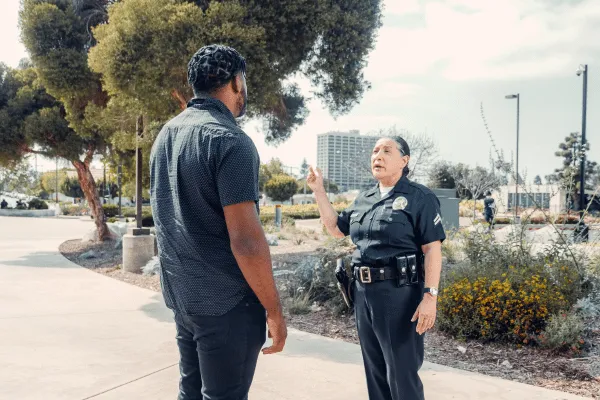
Imagine an officer testifying that a driver stumbled when stepping from the car and struggled to follow basic directions. On the dash camera, the driver exits normally, stands steadily, and answers questions without apparent difficulty. That contrast may be important, but it is not a complete defense by itself. I would examine the exact language of the testimony, the camera angle, and the rest of the encounter before arguing that the officer’s description was unsupported.
A Report Is a Summary
A report records the officer’s account and judgment; it is not a substitute for the underlying events. Descriptive words such as unsteady, confused, or slurred should be compared with what can actually be seen and heard. Video can also omit important details because a camera does not capture every angle, sound, or observation. A careful defense acknowledges those limitations.
The Hypothetical Courtroom Comparison
Suppose the officer says the driver repeatedly lost balance. The recording shows one brief adjustment of footing on an uneven shoulder. I would examine whether the officer’s wording exaggerates that event, whether there were other episodes, and whether the officer can explain the difference. Jurors may find an objective recording more persuasive than a characterization, but they still must consider all admitted evidence.
Preparation Before Cross-Examination
I would make a timeline of the recording, identify the exact report passages, and review the officer’s training and prior statements when lawfully available. I would not accuse someone of lying merely because a summary differs from video. The question is whether the difference affects the reliability of the claimed signs of intoxication and the State’s proof.
The First Question I Ask
When I evaluate a matter involving DWI police testimony Texas, I begin with the precise conduct the State says constitutes the offense. I do not begin by deciding whether the arresting officer is a good officer or whether the client is a good person. Those impressions cannot replace an element-by-element analysis of the charge. I identify the claimed time and place of driving, the asserted signs of intoxication, and the evidence available to establish those facts. Only then can I distinguish an important inconsistency from a detail that is unlikely to affect the outcome. This disciplined approach is especially necessary in what if a dwi officer’s testimony does not match the video.
What the Police Report Cannot Resolve
The report helps me understand the prosecution’s theory, but it is not a complete record of the encounter. It may contain the officer’s interpretations rather than the driver’s exact words, and it may summarize a lengthy interaction in a few paragraphs. I compare those descriptions with recordings, photographs, dispatch records, and testing documentation when they exist. I also identify what the officer could not see or hear. If an important event occurred outside the camera’s view, I do not pretend the recording answers that question. The defense should be careful about both the strengths and the limits of every source.
Why the Full Recording Matters
It can be tempting to focus on the few seconds that appear most favorable to the defense. That approach is incomplete. An officer may have observations from before the camera began recording, and later footage may show facts that change the meaning of an earlier event. I watch the available footage in sequence and make notes about what can be verified. I also check whether the recording is complete, whether there are multiple cameras, and whether audio is missing. For DWI police testimony Texas, the central issue is not whether one clip looks favorable but whether the complete record supports the elements the State must prove.
The Difference Between Suspicion and Proof
A lawful investigation can begin on less evidence than a criminal conviction requires. An officer may have grounds to investigate a possible DWI without having enough evidence to prove the offense beyond a reasonable doubt. I keep those legal standards separate. I examine the basis for the stop and any expansion of the detention, then consider the facts supporting arrest, and finally evaluate what evidence is likely to be admissible and persuasive at trial. A weakness at one stage may create a legal issue, but it does not automatically answer every later question. Each potential challenge needs its own factual and legal foundation.
How I Would Discuss the Options
Clients often want a prediction before the full evidence has been produced. I can explain the process early, but I avoid making confident outcome promises based on a brief account of the arrest. After reviewing the materials, I discuss the strengths and weaknesses of the State’s case, possible motions, negotiation, trial risk, and practical consequences of different resolutions. The client makes the ultimate decisions about fundamental choices such as whether to plead guilty or proceed to trial after receiving informed advice. My role is to provide a candid evaluation, not to sell certainty where none exists.
A Second Hypothetical Changes the Analysis
Change one fact in the original example: suppose the recording now clearly confirms the officer’s key observations, and the remaining testing records are internally consistent. That can substantially reduce the value of a defense argument that initially sounded promising. Change a different fact, such as a material discrepancy between the report and video, and further investigation may be warranted. I use hypothetical variations like these to explain why DWI police testimony Texas cannot be assessed through a single slogan or checklist. The result depends on what the State can actually establish with reliable, admissible evidence.
The Practical Lesson
The safest way to avoid an alcohol-related DWI is not to drive after drinking. Once an arrest has occurred, however, the legal task is different: preserve evidence, respect court orders and deadlines, and evaluate the accusation carefully. A person should not assume the charge is hopeless because the officer wrote a damaging report. Equally, a person should not assume a case will be dismissed because one detail looks favorable. My approach to DWI police testimony Texas is to test each important claim against the underlying evidence and make recommendations only after understanding the entire record.
Talk With a McKinney DWI Defense Attorney
If you are facing a DWI allegation in McKinney, Collin County, or a surrounding North Texas community, the facts of your own case deserve independent attention. I review the police report, available video, chemical testing when applicable, and the legality of the investigation before recommending a course of action. Contact my office to schedule a confidential consultation about the charge and the available options. A hypothetical example can explain a legal issue, but it cannot predict your outcome.
Citations
https://statutes.capitol.texas.gov/Docs/PE/htm/PE.49.htm
https://statutes.capitol.texas.gov/Docs/TN/htm/TN.524.htm
https://statutes.capitol.texas.gov/Docs/TN/htm/TN.724.htm

Practice Areas
Support
Connect
Copyright 2026. PAUL KEY LAW. All Rights Reserved.