
Se Habla Español
Blog
Legal insights, defense strategies, and practical guidance for individuals facing criminal charges in Texas.
Our blog breaks down Texas criminal law in clear terms — so you understand your rights, your options, and what to expect at every stage of the justice process.
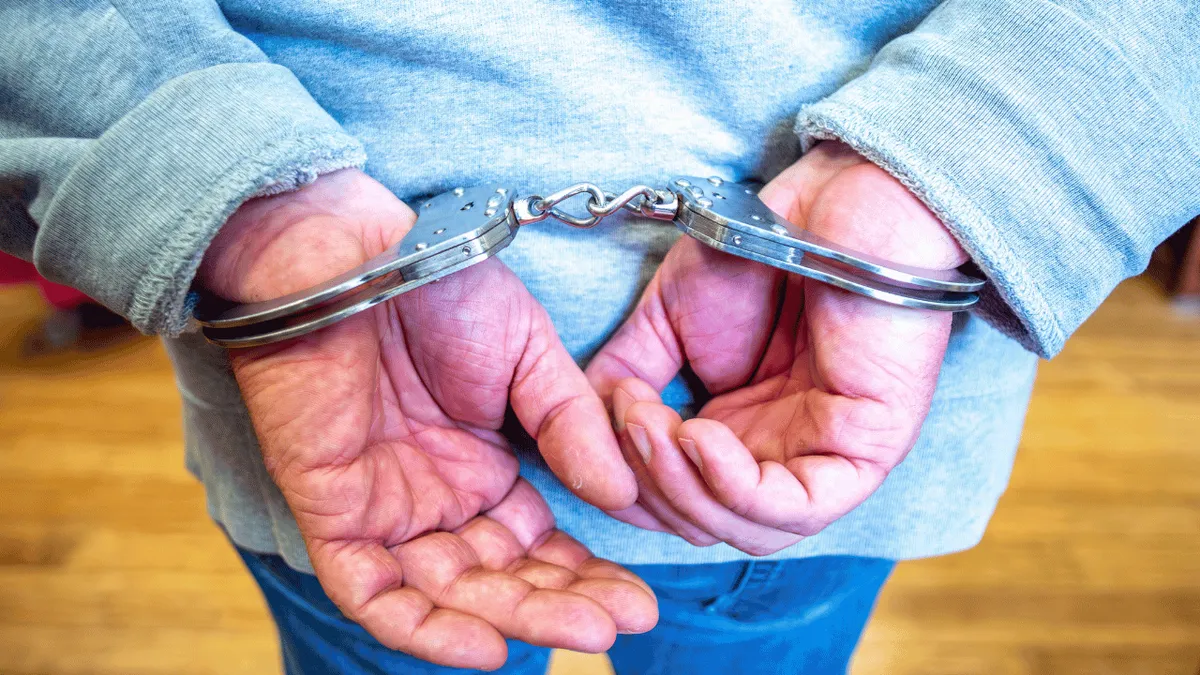
When an Argument Becomes a Family Violence Arrest
Consider a hypothetical married couple having an argument at home.
The disagreement becomes heated. One spouse decides the conversation is over and tries to leave the bedroom. The other spouse stands near the doorway and continues arguing. The spouse who wants to leave pushes past, and some physical contact occurs.
Nobody is seriously injured.
One spouse is angry and calls the police, perhaps expecting officers to come to the house, calm everyone down, and help end the argument.
Instead, officers arrive, separate the couple, take statements, and arrest one spouse for an offense involving family violence.
Both people are surprised.
Situations like this demonstrate one of the biggest misunderstandings surrounding family violence allegations in Texas. People often associate domestic violence with severe or repeated physical abuse. They may not realize that conduct occurring during a relatively brief argument can result in an arrest and a criminal case.
Once that happens, my job is to move beyond the label and determine what the evidence actually shows.
A Hypothetical Argument Between Spouses
Let's look more closely at our hypothetical case.
The husband and wife are arguing in their bedroom. The husband decides he wants to leave the house before the disagreement gets worse.
The wife does not want him to leave yet. She stands near the doorway and continues the conversation.
He attempts to move past her.
There is physical contact.
She says he shoved her. He says he was trying to get through the doorway and used his hands to move around her. She becomes upset and calls the police.
By the time officers arrive, both people have calmed down considerably.
The responding officers now have to determine what occurred before they got there.
That is where the investigation becomes critical.
Why Police May Make an Arrest
Responding officers do not have the benefit of watching the argument from beginning to end.
They arrive afterward.
They may encounter two emotional people giving different descriptions of what happened. Officers will look for physical evidence, injuries, witness statements, admissions, and other information that helps them determine whether an offense occurred.
Based on what they learn at the scene, they may decide there is probable cause to make an arrest.
But an arrest does not establish guilt.
Probable cause is not the same standard the State must satisfy to obtain a criminal conviction. If the prosecution continues, the State ultimately bears the burden of proving the criminal charge beyond a reasonable doubt.
That difference is one reason I independently examine what happened rather than treating the arrest decision as the final determination of the facts.
Physical Contact Does Not Tell the Whole Story
Return to our hypothetical.
We know physical contact occurred. Both spouses may even agree about that.
But that does not answer every important question.
What exactly was the contact?
Why did it occur?
How much force was used?
Was one person attempting to prevent the other from leaving?
Were there injuries?
Do the physical surroundings support either person's account?
Did either person make statements immediately afterward that are inconsistent with what they later told police?
The answers can substantially affect how I evaluate the case.
A police report may reduce a complicated interaction to a few sentences. A defense investigation needs to reconstruct the event in greater detail.
What Did the Officers Actually Investigate?
One of the first questions I ask when reviewing a criminal case is: What should the police have done that they did not do?
That question can be particularly important in family violence cases because officers frequently arrive after the alleged conduct has already occurred.
Suppose the wife in our hypothetical says she was shoved backward into a bedroom wall.
Did an officer look at the wall?
Was there damage?
Were photographs taken?
Did officers document the layout of the bedroom and doorway?
If the physical evidence supports her account, that may strengthen the State's case.
If the scene does not support the allegation, that may be important to the defense.
And if nobody bothered to examine the area at all, we may be left with an unanswered question that could have been investigated when the evidence was still available.
Were There Any Injuries?
Injuries can become another significant issue.
Suppose the police report says the husband forcefully shoved his wife. I want to know whether officers observed any injuries and whether they photographed what they saw.
The absence of a visible injury does not automatically establish that no offense occurred. Depending on the allegation, physical contact can be relevant even without a dramatic injury.
But the nature and extent of any injury can help us evaluate whether the physical evidence is consistent with the description of the event.
If photographs exist, I want to see them.
If body camera footage captures the alleged injury, I want to review that as well.
The point is not to make assumptions in either direction. It is to compare the allegation with the objective evidence whenever objective evidence is available.
What Do the Body Cameras Show?
Body camera footage can be particularly useful in family violence cases because it preserves what officers encountered shortly after arriving.
I want to know what each person said before they had significant time to think about the legal consequences of the situation.
Were their stories consistent?
Did one person's account change?
Did either spouse describe the contact differently from the description that later appeared in the police report?
What did the officers themselves say at the scene?
The video may also show the emotional and physical condition of both people. That context can be difficult to reconstruct months later from a written report.
As with DWI cases, I do not assume the report and the video will necessarily tell the story in exactly the same way.
I review both.
Were There Other Witnesses or Other Evidence?
Now suppose the couple's teenage child was in another room and heard part of the argument.
Did officers speak with that child?
Suppose a security camera outside the house shows the husband leaving immediately after the alleged incident rather than continuing the confrontation.
Was that video preserved?
Suppose text messages exchanged shortly after the argument provide additional context about what occurred.
Were those messages collected?
A thorough investigation should look for evidence that confirms an allegation as well as evidence that may contradict it.
When important sources of evidence are ignored, I want to know why.
What Happens When Everyone Calms Down?
Another complication in family violence cases is that the relationships involved often continue after the arrest.
The husband and wife in our hypothetical may wake up the next morning viewing the argument very differently. The wife may say she was angry when she called the police and never expected her husband to be arrested.
That does not automatically make the criminal case disappear.
Once the State is prosecuting the case, the alleged victim does not simply control whether the charge continues. Prosecutors evaluate the evidence and determine how they believe the case should proceed.
Likewise, a later change in someone's position does not automatically prove the original allegation was false.
It is simply another development that needs to be evaluated along with the rest of the evidence.
Suppose the Two Accounts Are Completely Different
Now change our hypothetical slightly.
The wife tells police her husband angrily shoved her because she was standing in the doorway.
The husband says she was physically blocking him from leaving and that the contact occurred only because he was attempting to get past her.
Those accounts may describe the same few seconds very differently.
My job is not to assume which account is correct.
I want evidence.
Where was everyone standing? What does the room look like? Are there photographs? Is there video? Were there witnesses? What did each person say immediately afterward? Are those statements consistent with later accounts?
The more independent evidence we have, the less the case depends exclusively on competing descriptions of the same event.
How Missing Evidence Can Affect the Defense
Sometimes the most important part of a criminal investigation is what is missing.
Suppose officers never photograph the room, never examine the wall, never interview an available witness, and never attempt to locate other evidence.
Months later, the prosecution may still rely on the allegation described in the police report.
At that point, I want to know why those investigative steps were not taken.
Missing evidence does not automatically prove my client is innocent. But if evidence could have confirmed or contradicted an accusation and investigators failed to preserve it, that omission may affect how confidently a jury can rely on the investigation.
The State has the burden of proof. The defense does not have to fill every hole left by the police investigation.
A Family Violence Arrest Is Not the Same as a Conviction
The word "family violence" carries substantial weight.
People hear the allegation and may immediately imagine the worst possible version of domestic abuse.
A jury's job, however, is not to decide a case based on the label.
The jury must evaluate the evidence presented in the particular prosecution.
That means examining what happened, what the witnesses actually said, what physical evidence exists, what investigators did, what they failed to do, and whether the State has proved the charged offense beyond a reasonable doubt.
The same principle applies when I first receive the case.
I start with the evidence, not the label.
How I Would Evaluate This Hypothetical Case
In our hypothetical, I would begin by obtaining and reviewing the police reports and available body camera footage.
Then I would compare the spouses' statements.
I would examine photographs of any alleged injuries and the location where the contact supposedly occurred. I would determine whether other witnesses existed and whether investigators spoke with them. I would look for video, messages, photographs, or other evidence that might corroborate either account.
Most importantly, I would identify the questions the police investigation failed to answer.
Only after completing that work would I advise the client about the strength of the State's case and whether the better strategy involves negotiation, additional investigation, or trial.
A family violence arrest may begin with a few chaotic minutes inside a home.
Defending the resulting criminal case requires slowing those minutes down and determining exactly what the evidence can prove.
Talk With a McKinney Family Violence Defense Attorney
If an argument has resulted in a family violence arrest in McKinney, Collin County, or the surrounding area, do not assume that the initial police report tells the entire story.
The scene, witness statements, body camera footage, photographs, physical evidence, and unanswered investigative questions may all affect the defense.
I independently review the evidence rather than relying solely on the conclusions reached during the initial police response. That allows me to determine what the State can actually prove and recommend a strategy based on the facts of the individual case.
Contact my office to schedule a confidential consultation.
Citations
https://statutes.capitol.texas.gov/Docs/FA/htm/FA.71.htm
https://statutes.capitol.texas.gov/Docs/PE/htm/PE.22.htm
https://statutes.capitol.texas.gov/Docs/CR/htm/CR.14.htm
Featured image by Shox Art

Practice Areas
Support
Connect
Copyright 2026. PAUL KEY LAW. All Rights Reserved.