
Se Habla Español
Blog
Legal insights, defense strategies, and practical guidance for individuals facing criminal charges in Texas.
Our blog breaks down Texas criminal law in clear terms — so you understand your rights, your options, and what to expect at every stage of the justice process.
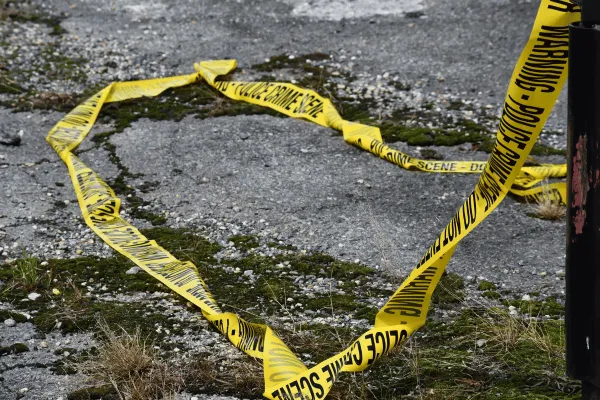
What I Look for First in a Criminal Defense Case
One of the first questions prospective clients ask me is, "What do you look for when you first review my case?" Many people assume the answer is whether I think they are guilty or innocent. It is not.
The first thing I want to know is whether law enforcement conducted a complete and competent investigation. Criminal cases are built on evidence, and before I can evaluate the strength of the State's case, I need to understand what evidence exists, what evidence is missing, and what questions investigators never answered.
My experience as both a prosecutor and a criminal defense attorney has taught me that an arrest does not necessarily mean the investigation was thorough. Sometimes it was. Other times, important steps were skipped, and those omissions can become critical when preparing a defense.
The First Question Is: What Could the Police Have Done That They Didn't?
Every criminal investigation involves decisions. Officers decide which witnesses to interview, what evidence to collect, which photographs to take, and whether additional follow-up is necessary. Those decisions shape the entire case.
When I begin reviewing a file, one of my first questions is simple: What could investigators have done that they did not do?
That question often reveals opportunities to challenge the State's evidence. If investigators never interviewed key witnesses, failed to collect available video, neglected to document the scene, or overlooked physical evidence, those omissions deserve careful examination. A jury expects law enforcement to conduct a professional investigation. When obvious investigative steps are missing, jurors are entitled to ask why.
The State bears the burden of proving guilt beyond a reasonable doubt. That burden includes conducting an investigation that answers the important questions, not simply gathering enough information to justify an arrest.
What Questions Were Never Answered?
Just as important as the evidence investigators collected is the evidence they never pursued.
Every criminal case raises questions. Sometimes those questions are answered through physical evidence, witness testimony, or video recordings. Other times, the investigation stops before those answers are found.
When reviewing a case, I ask questions such as:
Were all witnesses interviewed?
Was the alleged crime scene thoroughly examined?
Were photographs taken where they should have been?
Was available surveillance or body camera video preserved?
Does the physical evidence actually support the allegations?
If those questions remain unanswered, they often become important issues during trial preparation.
A defense attorney's job is not simply to read the police report and accept its conclusions. It is to determine whether the investigation actually supports those conclusions.
Corroborating Evidence Matters
One issue I see repeatedly is investigations that rely almost entirely on one person's version of events without looking for independent evidence that either confirms or contradicts that account.
That issue arises frequently in assault and domestic violence cases. Officers often arrive after an incident has occurred, and they must make decisions quickly. In many situations, they speak primarily with the individual they believe to be the victim, document that person's account, and make an arrest based on the information available at the time.
The problem is not that officers speak with an alleged victim. The problem arises when the investigation ends there.
If someone makes an accusation, I want to know what evidence supports that accusation. Was there physical evidence? Were there witnesses? Did investigators look for surveillance video? Did they examine the scene? Did they attempt to verify whether the account matched the available facts?
An accusation may be truthful, but it should still be tested against the available evidence. That is how reliable investigations are conducted.
The Crime Scene Often Answers Important Questions
One of the simplest investigative steps is sometimes overlooked: examining the location where the alleged offense occurred.
Consider a case where someone claims they were shoved into a bedroom wall during an assault. If that allegation is true, what would investigators expect to find? Are there marks on the drywall? Is there damage to furniture? Does the physical layout of the room support what has been described?
Those questions cannot be answered if no one ever examines the room.
The same principle applies to incidents alleged to have occurred in a backyard, parking lot, or business. The location itself may contain evidence that supports the allegation, contradicts it, or raises entirely new questions. When investigators fail to examine the scene, they lose an opportunity to collect objective evidence that could strengthen or weaken the case.
Missing Evidence Can Create Reasonable Doubt
Many people think reasonable doubt comes from proving someone else committed the crime. That is not necessarily true.
Reasonable doubt often arises because the investigation left important questions unanswered. If investigators never collected available evidence, failed to interview witnesses, or overlooked obvious leads, jurors may reasonably question whether the State has proven its case beyond a reasonable doubt.
At trial, those omissions become part of the discussion. If the officer responsible for the investigation cannot explain why certain evidence was never collected or why obvious investigative steps were skipped, that may affect how the jury evaluates the reliability of the entire investigation.
The burden of proof belongs to the State. The defense is entitled to point out when that burden has not been met.
Every Case Deserves an Independent Review
One lesson I learned as a prosecutor is that no investigation should be accepted without scrutiny. Good investigations deserve confidence because they answer difficult questions and gather evidence from multiple sources. Incomplete investigations deserve closer examination because they may leave important issues unresolved.
That is why I independently review every case. I compare witness statements with physical evidence, examine available photographs and video, evaluate the scene, and identify questions that investigators never answered. My goal is not to criticize law enforcement for its own sake. My goal is to determine whether the evidence actually supports the charges filed against my client.
Every criminal case deserves that level of attention.
Talk With a McKinney Criminal Defense Attorney
The first step in building a criminal defense is understanding the strengths and weaknesses of the State's investigation. Missing evidence, unanswered questions, and incomplete investigative work can all affect the outcome of a case.
If you have been charged with a crime in McKinney, Collin County, or Dallas County, I will conduct an independent review of the evidence, identify investigative gaps, and develop a defense strategy based on the facts rather than assumptions. Call my office for a confidential consultation.

Practice Areas
Support
Connect
Copyright 2026. PAUL KEY LAW. All Rights Reserved.